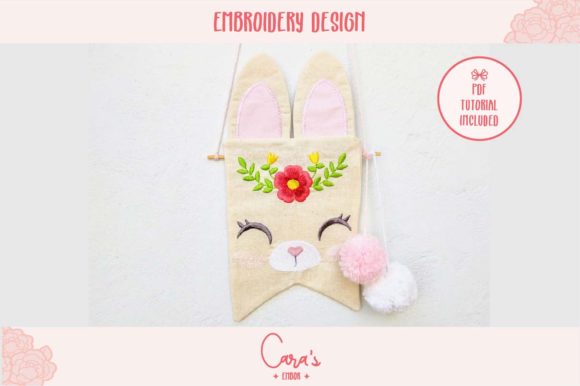
Bunny Banner in the Hoop: A Designer’s Review
As an embroidery designer who has spent years digitizing and reviewing files for commercial use, I approach every new machine embroidery design with a critical eye. It is not just about whether the image looks cute on a screen; it is about how that design translates to fabric, how it holds up under the needle, and ultimately, how it serves the brand identity of the small business owner using it. Today, I am taking a close look at Bunny Banner in the Hoop. This is not merely a decorative piece for home decor, although its category might suggest Bed or general Embroidery applications. For the savvy entrepreneur, this design represents a versatile asset for branded merchandise, provided it is handled with technical precision.
First Impressions: Balancing Playfulness with Professionalism
The first thing that strikes me about Bunny Banner in the Hoop is its inherent duality. The title suggests a whimsical, perhaps Easter-centric or pet-friendly aesthetic, but the "in the hoop" construction implies a structured, finished product. In the world of small business merch, this balance is crucial. A design that is too childish limits your market, while one that is too sterile lacks personality. This design feels friendly and approachable, yet the banner element provides a framework for professionalism. It signals to the customer that the brand values creativity and warmth.
For handmade brands, Etsy sellers, and boutique owners, this visual personality is a powerful tool. It does not scream "corporate," but it also does not look amateurish. It sits comfortably in the space of artisanal quality. When I review a digital embroidery file like this, I am looking for clean lines and logical stitch paths. The description notes that the design has been tested and reviewed to ensure top quality, which is a reassuring starting point. However, as any experienced decorator knows, "top quality" in a file does not guarantee a perfect finished product without proper execution on your specific machine and fabric.
Real-World Applications for Small Business Merchandise
Let us move beyond theory and discuss where Bunny Banner in the Hoop actually shines in a commercial setting. The versatility of this design allows it to transcend simple home decor. Here is how I envision it working for various business models:
- Embroidered Patches: This is arguably the strongest use case. An in-the-hoop design often creates a self-contained unit that can be easily turned into a patch. For a pet brand or a children’s boutique, these patches can be sold as add-ons or used to brand tote bags and jackets. They offer a high perceived value because of the dimensional, finished edge.
- Apron Embroidery: For bakeries, florists, and creative studios, staff uniforms are walking billboards. Stitching this design onto the bib of a canvas apron adds a touch of whimsy that aligns well with service-oriented, hands-on businesses. It softens the uniform and makes staff appear more approachable.
- Tote Bag Design: Canvas totes are a staple for craft fairs and retail shops. Placing this design on a high-quality cotton tote transforms a simple bag into a branded statement piece. The banner aspect allows for potential customization if the design permits text editing, or it stands alone as a recognizable logo mark.
- Cap Embroidery: While challenging due to curvature, a smaller version of this design could work on the side panel of a cap or as a front accent for a casual, lifestyle brand. It appeals to the "merch creator" demographic who wants to offer headwear that feels unique rather than generic.
The key here is consistency. Whether you are creating custom apparel for a local café or designing product packaging accents for a handmade soap line, the visual language of Bunny Banner in the Hoop supports a narrative of care and craftsmanship. It enhances buyer engagement by offering a tactile, premium experience that printed graphics simply cannot match.
Technical Considerations and Potential Pitfalls
While the aesthetic appeal is strong, we must address the technical realities. The product description wisely advises: "Test stitch the design, or portions of it, before stitching it onto your final item, as results may vary depending on fabric and stabilizer." This is not just a disclaimer; it is the golden rule of commercial embroidery. Here are the specific areas where you need to exercise caution:
- Fabric Texture and Stabilizer: If you are stitching this onto a textured fabric like terry cloth for towels or a loose-weave linen for tote bags, the detail may get lost. You must use a cut-away stabilizer for items that will undergo frequent washing, such as staff uniforms or baby items. For caps, a stiff buckram and proper hooping technique are non-negotiable to prevent distortion.
- Stitch Density: In-the-hoop designs can sometimes have high stitch density where the edges are folded and sewn down. On thin fabrics, this can cause puckering. Always test on a scrap piece of your actual production fabric. If the fabric pulls, you may need to adjust your tension or use a lighter weight thread.
- Size Constraints: Be mindful of the hoop size required. If you are attempting to scale this down for a small chest logo on a polo shirt, ensure that the intricate details of the bunny and banner do not merge into a blob. Small patch sizes require simplified designs. If the original file is large, check if a scaled-down version retains its clarity.
- Thread Color Contrast: The success of this design relies heavily on contrast. If you are stitching a white bunny on a light gray apron, it will vanish. Use a color chart to plan your thread colors against your base fabric. For dark uniforms, consider using a satin stitch border or a backing patch to make the design pop.
Enhancing Brand Identity and Customer Trust
Why go through the trouble of testing and perfecting this design? Because it directly impacts your brand identity. In a market saturated with print-on-demand goods, embroidered items signal longevity and quality. When a customer receives a tote bag or a patch featuring Bunny Banner in the Hoop, they are receiving a tangible piece of your brand’s soul. It builds trust. It shows that you care about the details.
For product designers and merch creators, this design serves as a versatile asset in your library. It can be used in printable mockups to showcase potential products to clients before a single stitch is made. This reduces waste and allows for better inventory planning. Furthermore, using a tested, high-quality digital embroidery file minimizes the risk of production errors, which protects your profit margins and your reputation.
Designer’s Checklist for Production
Before you run a full batch of commercial embroidery projects, run through this checklist:
- Verify Licensing: Confirm commercial licensing terms. Ensure you have the right to sell finished products made with this file.
- Check File Formats: Ensure the embroidery file format matches your machine (PES, DST, JEF, etc.). The description does not specify formats, so check the download package carefully.
- Create a Mockup: Use a printable mockup to visualize the design on different items. Does it look balanced on a cap? Is it too large for a pocket?
- Test on Real Fabric: Do not skip this step. Stitch out one sample on the exact material you intend to use for production.
- Inspect Spacing: Look for any jumps or trims that might be excessive. Clean up the path if necessary to reduce production time.
In conclusion, Bunny Banner in the Hoop is more than just a cute design; it is a strategic tool for small business owners. When applied with technical expertise and creative vision, it elevates standard merchandise into branded treasures. Whether you are decorating aprons for a bakery, creating patches for a pet store, or adding flair to tote bags for a boutique, this design offers the charm and quality needed to stand out. Respect the fabric, trust the process, and let your embroidery speak for your brand.